 Business License
High-Temperature Fire-Resistant Sleeving The Invisible Guardian of Modern Industry
High-Temperature Fire-Resistant Sleeving: The Invisible Guardian of Modern Industry
Under the threat of high temperatures and flames, a seemingly ordinary material full of technological energy silently safeguards our industrial security and property.
In the blistering environments of steel plants, molten iron splashes can reach temperatures of thousands of degrees Celsius; in petrochemical plants, pipeline leaks may cause fatal fires; in the blink of an eye as high-speed trains race by, braking systems generate extreme heat up to 800°C...
The safety of these extreme environments relies on an inconspicuous yet vital protective material—high-temperature fire-resistant sleeving.
01 What is High-Temperature Fire-Resistant Sleeving?
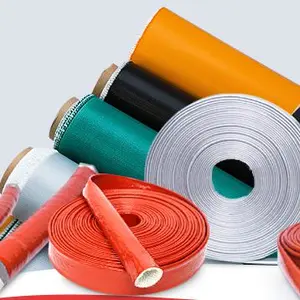
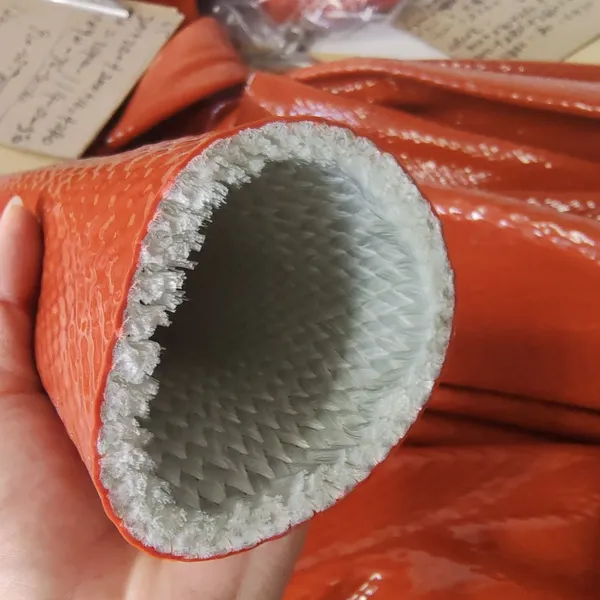
High-temperature fire-resistant sleeving, also known as silicone rubber fiberglass sleeving, is a special protective material made from a tube woven from high-purity alkali-free glass fibers, externally coated with an organosilicon rubber vulcanized layer.
It effectively isolates flames, high-temperature molten splashes, and heat radiation in extreme environments, making it an indispensable safety barrier in industrial and construction fields.
02 Technological Core: Material and Structural Innovation
Modern high-temperature fire-resistant sleeving adopts a multi-layer composite structure design, achieving breakthrough improvements in material performance.
Basic Material Composition:
Glass fiber base material: Woven from high-loft alkali-free glass fibers, providing the basic skeleton and heat resistance
Silicone rubber coating: Externally coated with thick iron oxide red or blue silicone, offering flame retardant and corrosion resistance protection
03 Exceptional Performance: Protection Beyond Limits
The performance parameters of high-temperature fire-resistant sleeving are astonishing, almost redefining the limits of protective materials.
Temperature Resistance:
Long-term heat resistance: Can be continuously exposed to 260°C high temperatures without damage
Instantaneous heat resistance: Withstands temperatures up to 1650°C (for 15-30 seconds), providing critical time for emergency repairs
Extreme testing: Can endure 1000°C destructive testing for half an hour, with only the outer coating carbonizing after 30 minutes while the glass fibers remain intact
Protective Performance:
Flame retardancy: UL94 V-0 certified, with self-extinguishing time shortened to within 3 seconds
Thermal barrier effect: Under 1200°C flame impact, the temperature rise on the non-fire side is controlled within 80°C, forming an effective heat barrier
Environmental safety: Halogen-free formula avoids releasing dioxins and other toxic gases when burning, with combustion product toxicity 40% below international standard limits
Comprehensive Protection:
Combines electrical insulation (voltage and arc resistance), chemical inertness (oil and acid/alkali resistance), and environmental durability (moisture and aging resistance), protecting pipelines for decades in metallurgical, power, and petrochemical applications.
04 Application Fields: Safety Guardians Across Industries
High-temperature fire-resistant sleeving has extremely wide applications, covering almost all industrial fields requiring high-temperature protection.
Industrial Manufacturing:
Steel smelting: Isolates electric furnace molten steel splashes and high-temperature steam pipelines, preventing cable hardening and embrittlement
Petrochemicals: Protects high-temperature pipeline valves, preventing oil and gas leaks from causing combustion accidents above 800°C
Power facilities: Ensures safe operation of power transmission equipment in high-temperature power plant environments
Transportation:
High-speed rail systems: Wraps high-speed rail braking system wiring harnesses, withstands instantaneous 800°C heat from brake friction
Shipbuilding: Used in ship engine room cables, preventing high-temperature oil erosion and resisting marine salt spray corrosion
New energy vehicles: Creates fire barriers between battery modules, slowing thermal runaway spread by 300%
Construction and Energy:
Skyscrapers: Forms three-dimensional fire compartments in cable shafts, with smoke permeability below 0.5mg/m³
Nuclear facilities: Uses special sleeving containing aluminum foil layers to block nuclear reactor heat radiation
Geothermal power plants: Successfully blocks hydrogen sulfide gas penetration, reducing corrosion rate to 0.02mm/year
05 Intelligent Evolution: Future Protection Technology
High-temperature fire-resistant sleeving technology continues to innovate and evolve, with intelligence becoming the development direction for new generation products.
Intelligent Monitoring Functions:
Embedded distributed fiber optic sensors enable precise monitoring with 30 temperature points per meter, error less than ±1.5°C
Integration with industrial IoT platforms reduces fire warning response time to 0.8 seconds
Machine learning models predict material aging trends with 89% accuracy in maintenance cycle predictions
Future Technology Integration:
4D printing technology: Develops temperature-responsive smart materials that automatically expand to form secondary protective layers when heated
Quantum-level simulation: Optimizes material lattice structure through molecular dynamics calculations, theoretically breaking the 3000°C temperature limit
Bio-based alternatives: Cellulose composite materials extracted from corn stalks, with carbon emissions only 1/3 of petroleum-based products
06 Selection and Installation: Professional Considerations Matter
Choosing the appropriate high-temperature fire-resistant sleeving and installing it correctly is crucial for its performance.
Selection Considerations:
Temperature range: Choose appropriate models based on continuous and peak temperatures in the actual application environment
Aperture size: Common specifications from Φ3.0mm to Φ150mm, select based on protected object size
Environmental factors: Consider presence of chemical corrosion, mechanical wear, or special environmental conditions
Installation Maintenance Points:
Surface pretreatment: Clean pipeline surface to ensure silicone layer adhesion
Gap control: Maintain 2-3mm expansion space between sleeving and pipeline to prevent thermal expansion deformation
Lifecycle monitoring: Replace when surface silicone shows cracks or hardness exceeds Shore 75A
As industrial technology continues to develop, high-temperature fire-resistant sleeving has evolved from a single protective product to an important component of intelligent safety systems.
They not only protect equipment and personnel in extreme environments but also achieve both safety and energy saving goals by reducing heat loss by up to 30%.
In the future, with the widespread application of 4D printing, quantum-level simulation, and bio-based materials, this "invisible guardian" will continue to evolve, demonstrating the profound value of safety in more scenarios.

Contact Us